


I spent part of May in Paris, shooting for Numéro. Between setups, I kept looking up. The rooftops of Paris do something to me every time. The zinc, the chimneys, the angles repeating across the whole city until they stop looking like roofs and start looking like an abstract painting.
Standing there, I realized that almost everything that moved me this month had the same thing in common. It was not about the surface. It was about the structure underneath it. The order you only notice when you stop looking at the obvious thing.
Here is what stayed with me.
Michael Wolf, Paris Rooftops
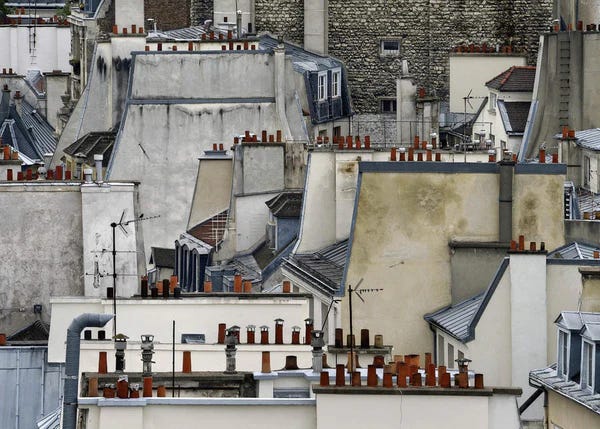
Those rooftops sent me straight back to Michael Wolf and his series Paris Rooftops. Wolf photographed the roofs of Paris with everything in focus, framed so tightly that the city dissolves into pure geometry. No towers, no monuments, none of the Paris you are sold on a postcard. Just lines, colour, and repetition, until you genuinely cannot tell whether you are looking at a photograph or a painting.
What I admire most is how simple it is. He did not invent anything. He refused to photograph the obvious Paris and pointed his camera at what everyone walks past. The result is one of the most recognizable bodies of work I know, built entirely from something hidden in plain sight. That is the hardest kind of originality. Not adding more, but seeing what is already there.
Hannsjörg Voth, Goldene Spirale
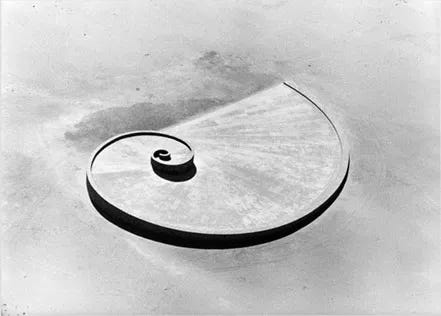
From a city of roofs to an empty desert. Hannsjörg Voth is a German artist who spent around twenty years building a small group of monumental structures on the Marha Plain in southern Morocco. The one I keep returning to is the Goldene Spirale, the Golden Spiral, built between 1992 and 1994.
It is a wall of compressed earth, 260 metres long, that curls into a perfect spiral and rises to six metres. The plan follows the golden section, the same Fibonacci proportion you find in shells and plants. At the centre he dug a well, and in the well floats a single boat. A piece of mathematics, made by hand, alone, in one of the emptiest places on earth.
What gets me is that he built it from clay, knowing it would slowly erode. The decay is part of the work. He made something based on the oldest order we know, and then handed it back to time. I pulled on this same thread earlier this year in Slow space, fast matter, where a sculptor and a gardener taught me about matter, patience, and what it means to work with time instead of against it. His other desert works, the Himmelstreppe and the Stadt des Orion, follow the same instinct, and they are all worth looking up.
10 Corso Como, Milan
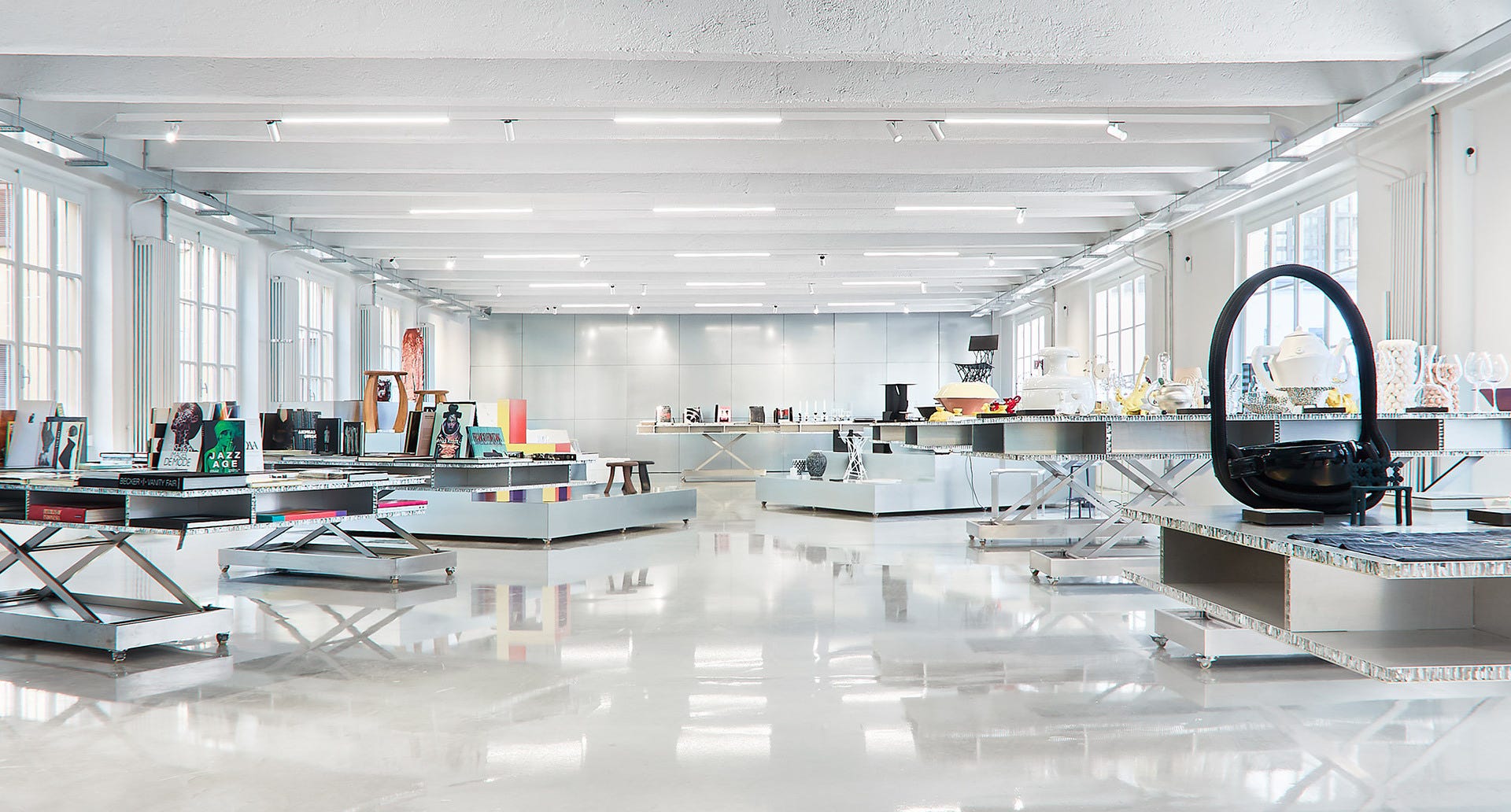
Something completely different, but the same thread. I visited 10 Corso Como in Milan in March, one of the best shops and exhibition spaces in the city, and I have not stopped thinking about it since. It is the space Carla Sozzani opened in 1990, and the place that more or less invented the idea of the concept store.
What I love about it is that it is not a shop in the way people later copied it. It is a curated world. Fashion, design, books, a photography gallery, a café, all chosen by one person with one point of view, arranged so the whole thing reads like a magazine you can walk through. Most stores sell you things. This one shows you a way of seeing, and the products are almost a side effect.
It is a reminder that curation is a creative act in itself. The order you put things in, what you place next to what, the rhythm of a space. That is composition, the same as in a photograph. I wrote a whole essay around this idea, Does Every City Need an Art Director?, about what happens when no single eye is responsible for how a place looks. 10 Corso Como is the opposite case. A space where one eye is responsible for everything, and you can feel it the moment you walk in.
Daniel Arsham, Future Relic
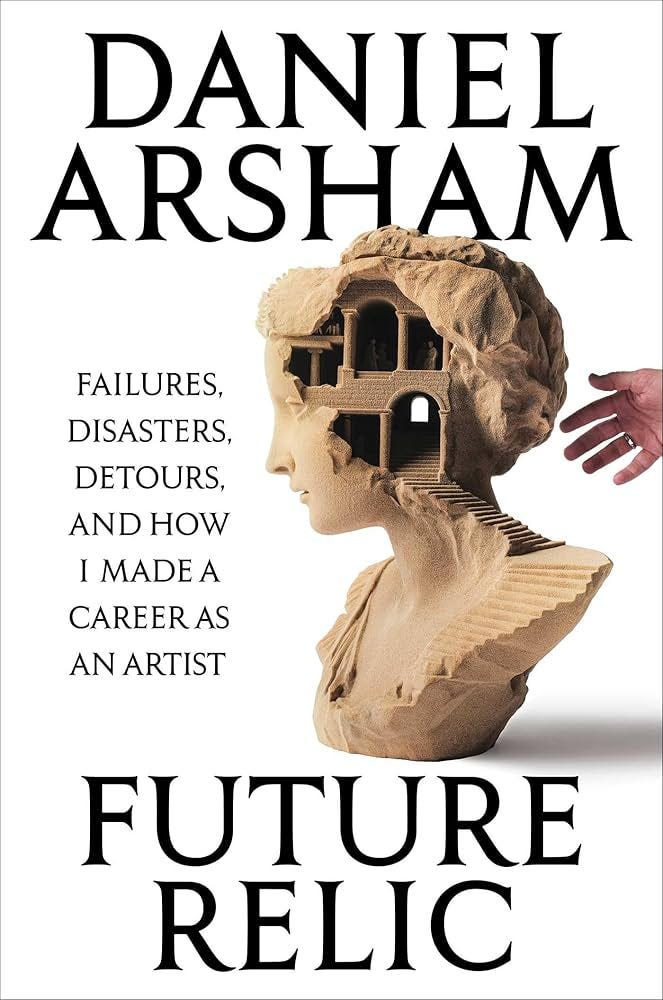
And to close, a book. Daniel Arsham, the artist known for his fictional archaeology, those eroded, calcified casts of everyday objects that look like they were dug up a thousand years from now, just published Future Relic.
I expected a beautiful art book. It is something more honest than that. The full title is Failures, Disasters, Detours, and How I Made a Career as an Artist, and that is exactly what it is. Arsham writes openly about the wrong turns, the things that did not work, the unglamorous reality behind a career that looks effortless from the outside.
As someone who built his own path without an obvious map, this one hit home. We see the finished work, the shows, the collaborations. We almost never see the structure underneath, the years of detours and failures that actually hold it all up. I once approached this from the other side in Why I photograph what I can’t remember, about work that only makes sense long after you make it. Arsham makes future relics out of objects. In this book, he does it with his own story, and shows you the foundations under the surface.
That, in the end, was my month. Four very different makers, all pointing at the same thing. The surface is never the interesting part. What holds it up is.
What stayed with you this month?
– Bastiaan