


On Friday 30 October, I will be opening a new exhibition at the gallery in Alkmaar and would like to invite you to the opening. The exhibition brings together ten years of work with Tinotenda Mushore, my muse and the person who has appeared in front of my camera more than anyone else. The opening runs from 16:00 to 19:00, and everyone who comes will be given a copy of the catalogue we made for this show, to take home. Registration is required, and you can do so here: studiowoudt.com/events/opening-tino-10-year-show
I have written down our whole story, from the beginning until now, for anyone who wants to read more.
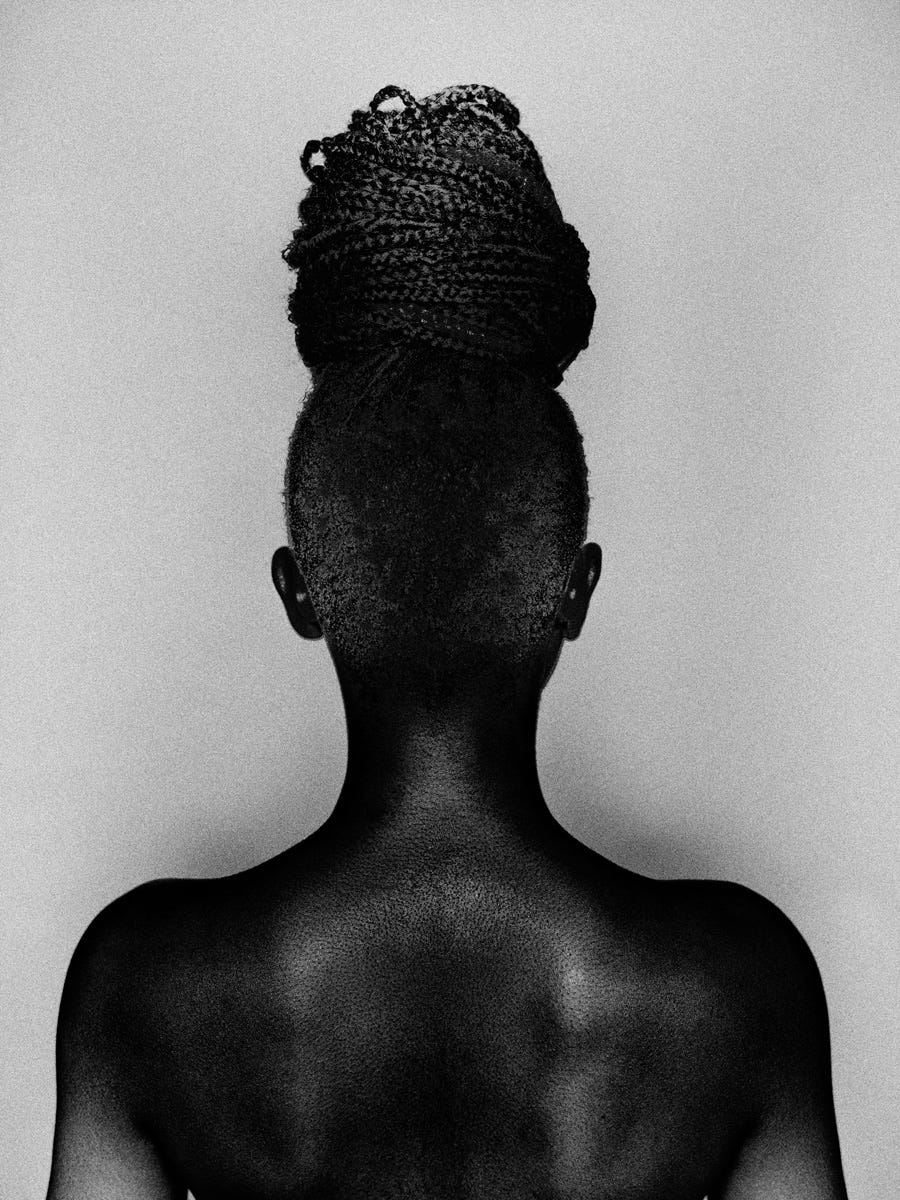
It started with a post on Facebook. At that time, I had just one studio room and considerably more ideas than contacts. I put out an open call for a nude shoot, as you do when you have nothing else to work with. Among the replies was hers.
What I did not know at the time, and only found out years later when she announced it to the world, is that she had never done a nude shoot before. She had done topless shoots once or twice, but that was it. She replied anyway, letting me assume otherwise because she wanted the shoot badly enough to take the risk. By the time I found out, we had already taken the photos that would lead to us working together for a decade.
She also told me later why she had answered at all. That part of the story is the one I understand best now, but I understood it least at the time. She had spent years going to agencies in Amsterdam with her portfolio under her arm. Everywhere she went, they loved the pictures, but the answer was always the same. “Too short.” Not the right height for it. In her own account of those years, the word ‘height’ is repeated over and over again.
So, she stopped waiting to be picked and started choosing photographers herself. She was strict about it because she had seen other people starting out say yes to everyone, only to end up with a portfolio full of work they did not want. She only wrote to people whose work she genuinely admired. When she read my post, she noticed what was missing from it: any requirement at all. No height. No ethnicity. Nothing about a look.
She has since said that she applied to those with requirements too, because if you’re not slightly arrogant, you’ll only answer one post and have one shot. But mine was the one without any restrictions, and that is why it went to the top of the pile.
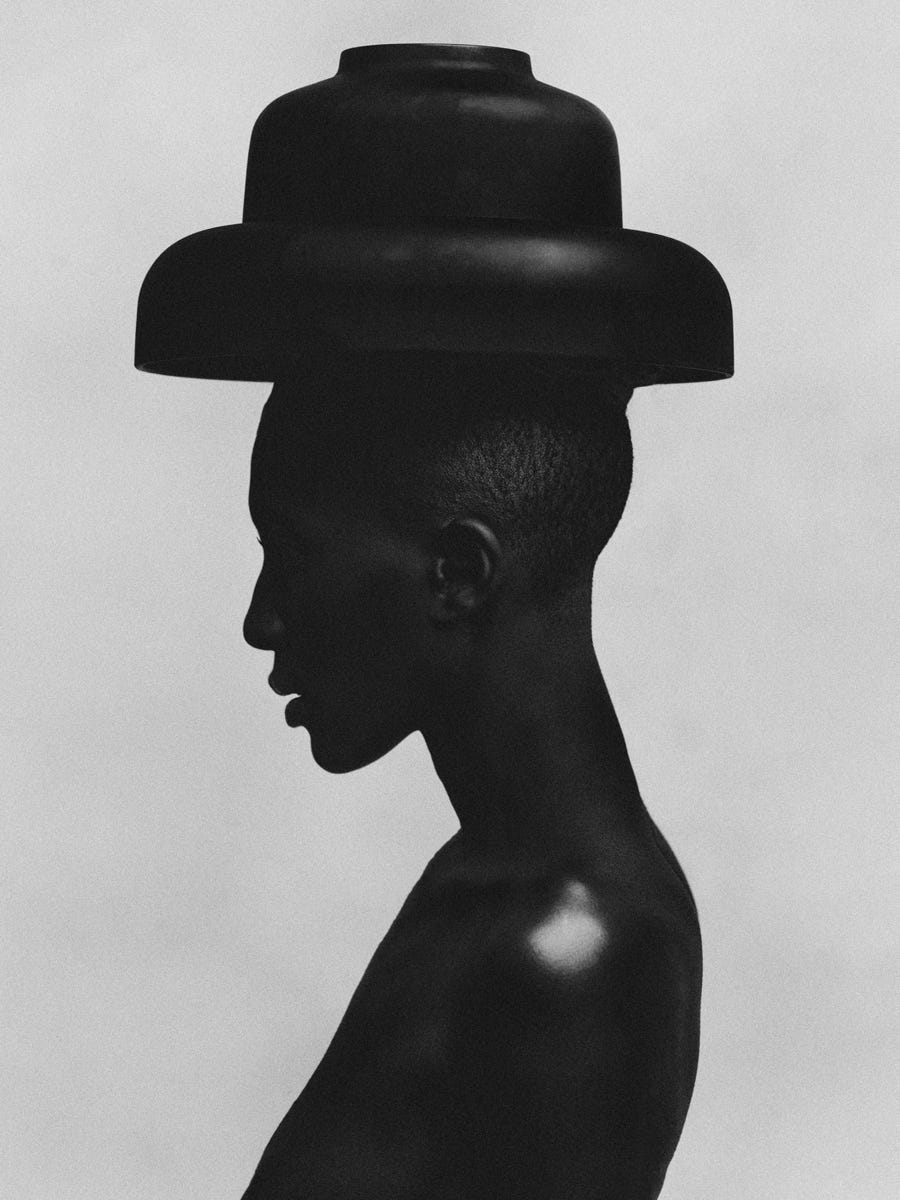
The first day did not go as either of us had expected, but neither of us mentioned it at the time. When she walked in, I told her that everything would be black and white, to which she nodded and got on with it. What was actually going through her mind, she only admitted to me much later, laughing, while we were recording. She was thinking that she didn’t want everything to be black and white; she wanted at least one or two things to be in colour. Then, in her words, ‘Have you seen my skin?’
Then she decided to let it go. She reminded herself that it wasn’t her shoot, that she had chosen to work with me for a reason and that the only thing to do was to trust the process and see what the outcome would be. This silent decision, made by someone who had known me for only an hour, is the reason why there will be an exhibition opening in October.
Another thing worth mentioning about that day is that we barely took any nude photos. The pictures that emerged from that initial session are not nude pictures. We built things and took them apart again. By the evening, I knew I wanted to continue working with her. As a way of working.
We have aimed to shoot once a year ever since. Sometimes it slips, and sometimes there are more. Between 2015 and 2020, we managed six shoots, which is about as close to a rhythm as we have ever come. There has never been a schedule or a contract; only a moment when one of us decides that it is time.
Almost all of our work has taken place in the same room. Apart from one afternoon on a beach years ago, every picture we have ever made together was made in the studio in Alkmaar. This exhibition therefore showcases ten years of work in one space. I did not realise this was unusual until I laid the selection out and counted.
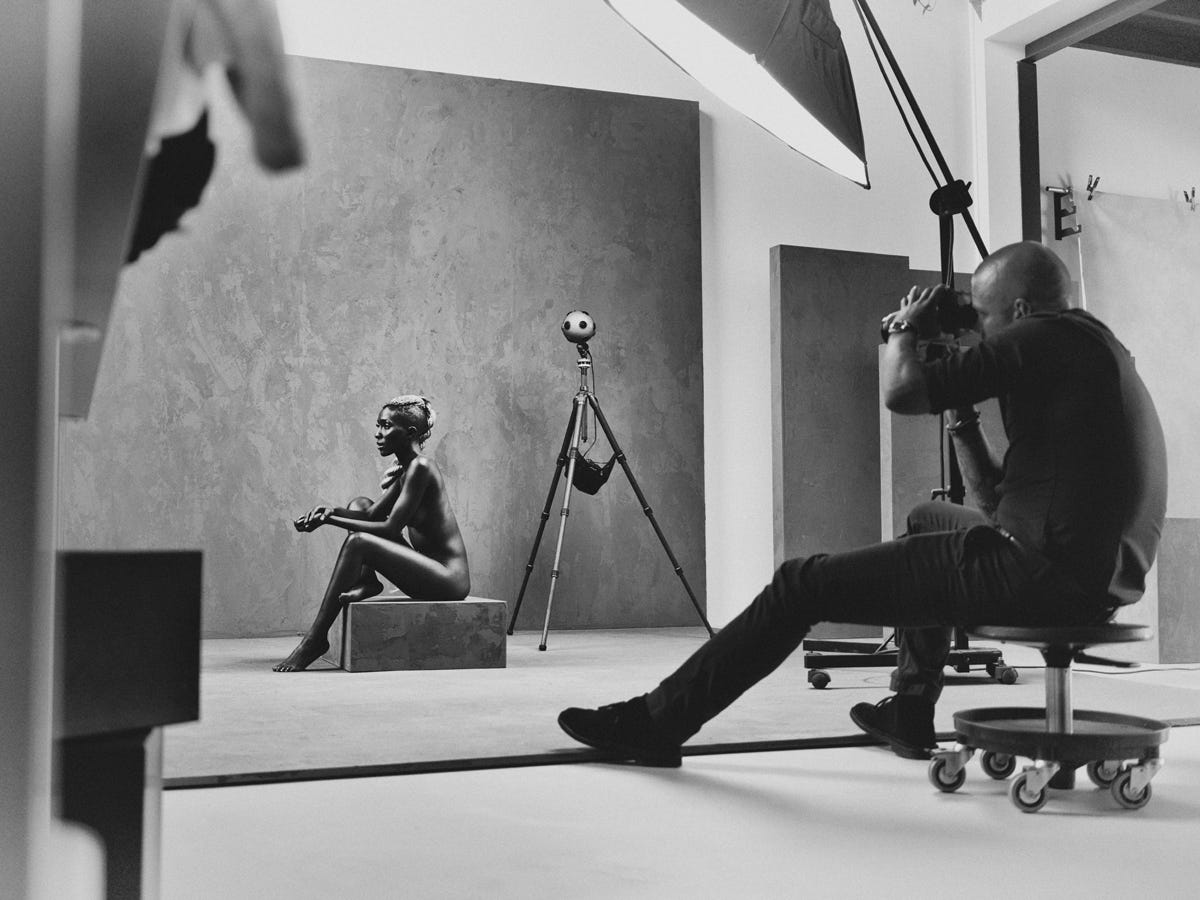
The days are long, from nine in the morning until roughly seven in the evening, and there is always a team. Janneke Schrey is building the shapes with me now. In the early years, it was Nathalie Alting-Sieberg, alongside a rotating group of make-up artists. Some years, there was also somebody filming in the background.
There is always music, a mix of our tastes: I lean towards dance and techno, while Tino puts on hip-hop, rap and R&B. The person in front of the camera has to feel at home before anything good happens, and music is the fastest way to achieve that. So the playlist brings together two worlds, and that is exactly right.
There is also a great deal of talking, most of which is hers. Tino is loudly and generously present, bringing an enormous amount of energy into the room, so there is energy there all day. People imagine my sets are silent because the pictures are quiet, but they’re not silent at all. They are loud, and the quiet arrives afterwards.
We prepare by looking at materials beforehand and thinking about which things might sit together and what shapes they could make, but that’s just the starting point — the images themselves are invented on the day. We almost never work with clothing. The shapes are built out of whatever we have gathered. Because the work is black and white, everything has to earn its place through its texture rather than what it actually is.
Then we start building and keep going until we have gone too far. We take it all apart piece by piece until we find what works, and sometimes what works turns out to be the first thing we tried an hour earlier. One of my favourite pictures that we have ever made came about in exactly that way.
There is another one where a shape was resting on her head and it fell, and I photographed her at the moment it came off. That image only exists because we had been working long enough that day for something to go wrong. You cannot repeat it and you cannot stage it, and if you tried it again it would be dead on arrival. A day with Tino also produces more usable images than any other shoot I do in a year, consistently, and I have never entirely understood why.
For a shoot to work as a collaboration, both people have to be genuinely invested. The moment I am on set doing nothing but pushing my own ideas, the other person becomes a prop, and you can see that in the pictures. Tino once described what the other version looks like from her side of the camera. With most photographers, if she wants to try something that hasn’t occurred to them, she has to wait for them to adjust a light, quickly execute her idea while they’re not looking, and then wait for them to notice it and take credit for it. She says that in her head, she thinks this is what she suggested twenty minutes ago.
She also works differently with me than with anyone else, and she noticed that long before I did. With me, she is more static with smaller movements and holds poses for longer because she knows that I will take four or five frames of the same position with a shoulder or chin shifted by a centimetre. Elsewhere, she moves far more because that’s what the work in front of her requires. She adapts her entire approach to whoever she is working with, and nobody asked her to.
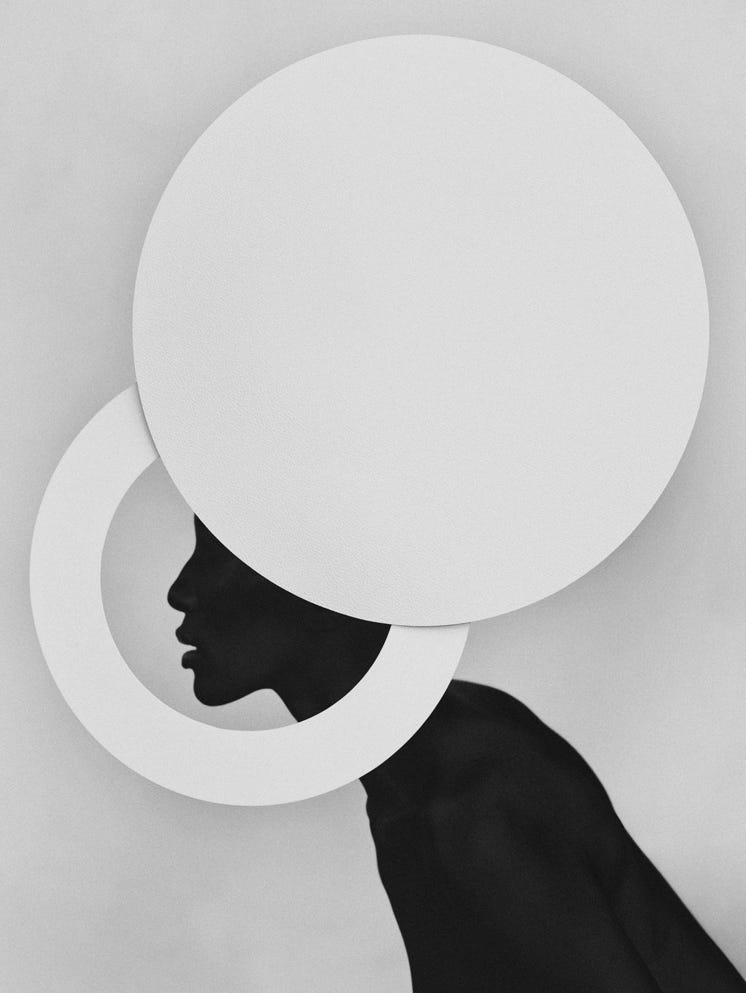
She once told me that I am the only photographer to ever ask her to wear her hair naturally, and I have thought about that a great deal since. It had never occurred to me to ask for anything else.
The oldest picture in this exhibition is Tino Crown, taken in 2016. It shows her back with her hair built up into a shape. It is the only piece in the exhibition where her hair is the main focus rather than something you glimpse under a brim. This picture also taught me what this collaboration was going to be about because, although you never see her face, it is unmistakably her.
When I asked Tino for a quote for this piece, she sent back a message that was far too generous to print in full. One line I cannot leave out is: ‘You made me realise I have a beautiful back.’
She came here from Zimbabwe when she was twelve. Her mother was a model, so she had been working in front of a camera since she was a child, long before either of us knew each other, and she has therefore been involved in this industry for considerably longer than I have.
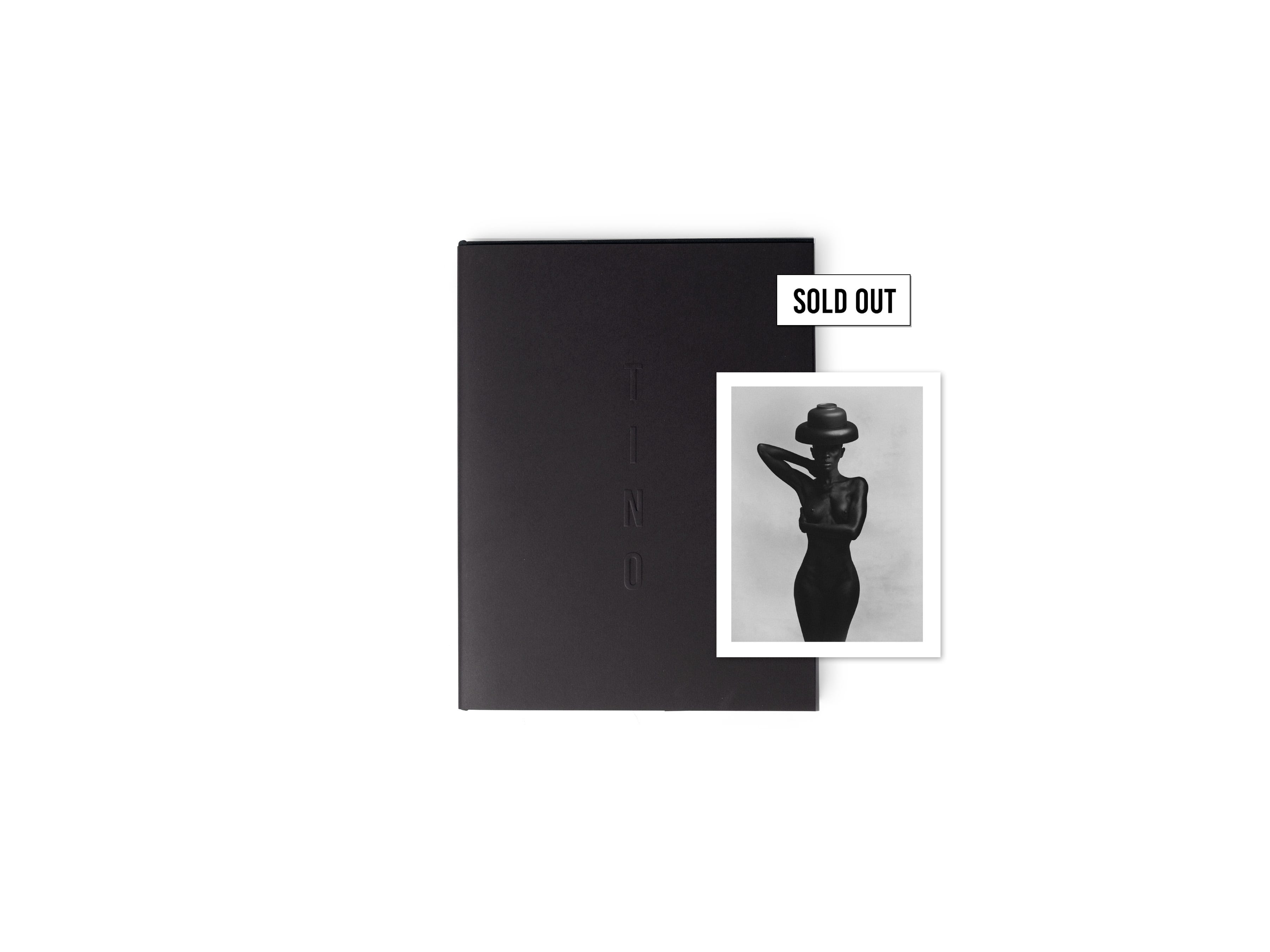
In 2020, everything stopped. The shoots stopped, as did the exhibitions, and it was during that long, empty period that I started 1605 Publishers, which has since grown into 1605 Collective. I decided that the first book had to matter, and by then Tino and I had been working together for five years — a significant anniversary in itself. The first book we ever published was Tino.
It was all black with one word on the cover. It was an edition of 150, each of which included a print that she had chosen herself. It sold out in five days.
I did not tell her it existed. I gave it to her on the day we sat down to record a long conversation. The microphones were already running, so there is an audio recording of her opening it for the first time. She cried. On tape, she says to nobody in particular that I made her a book and that she cried like a baby. I still cannot listen to that part without stopping what I am doing.
The print inside wasn’t a one-off gesture either. From the very beginning, we have had an arrangement whereby, after every shoot, she chooses an image, which I then have printed and framed for her. Ten years’ worth of these hang on a wall somewhere other than this gallery.
Selecting just fifteen pictures from ten years of work is a strange exercise, but I would recommend it to anyone who has been doing the same thing for a long time. Laying the pictures out in order reveals things about your work that you never intended, and once they are side by side, there’s no arguing with them.
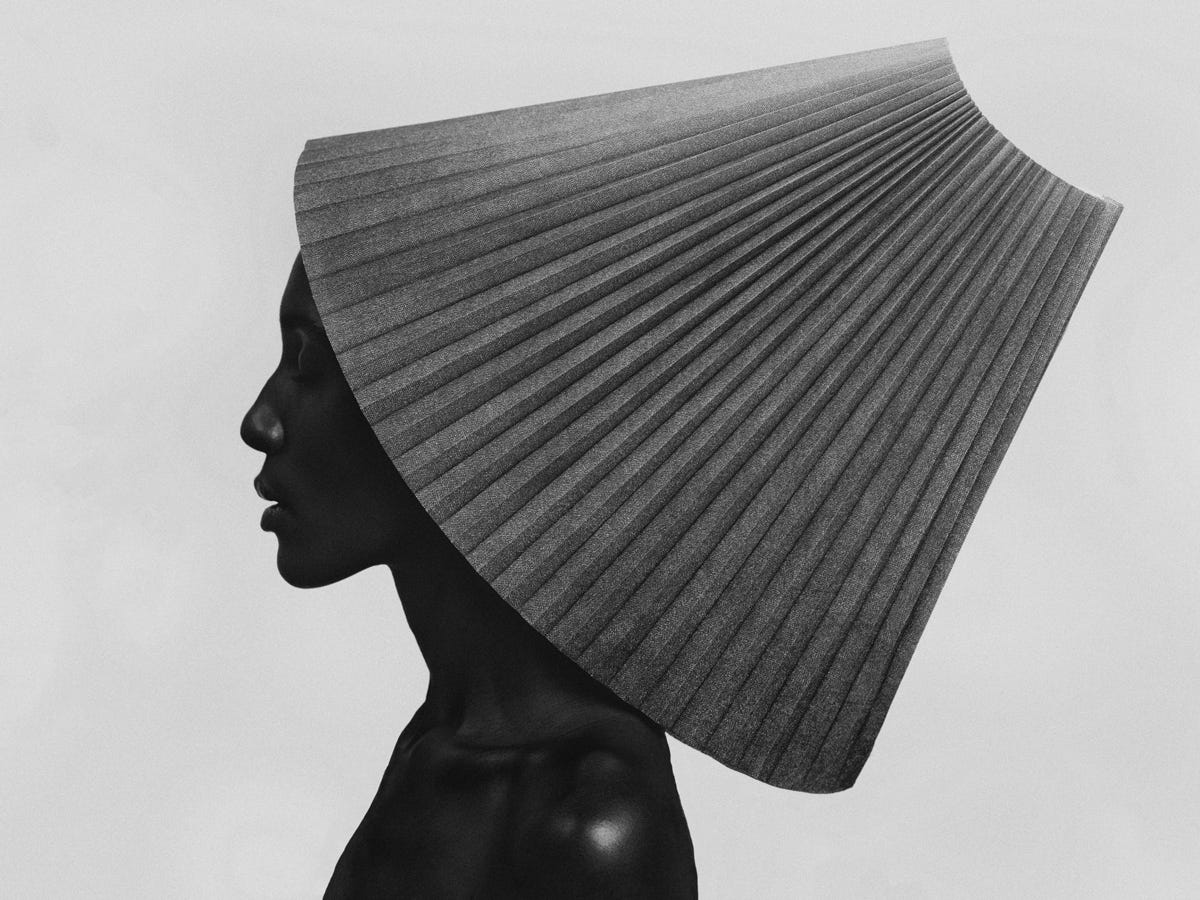
In the earliest pictures, there is skin, hair and grain, but not much else. Then form starts to dominate, so that by Cycle II in 2020, her face is a silhouette caught between two white discs. By Fold in 2022, the body has almost disappeared beneath a pleated fan. Nobody planned any of this, and at some point it changed again because the most recent work returns to fabric, gesture, and a body that is present in the frame. Ten years of returning to the same subject matter produces a shift in style, and I could not see this shift until I put the pictures in order.
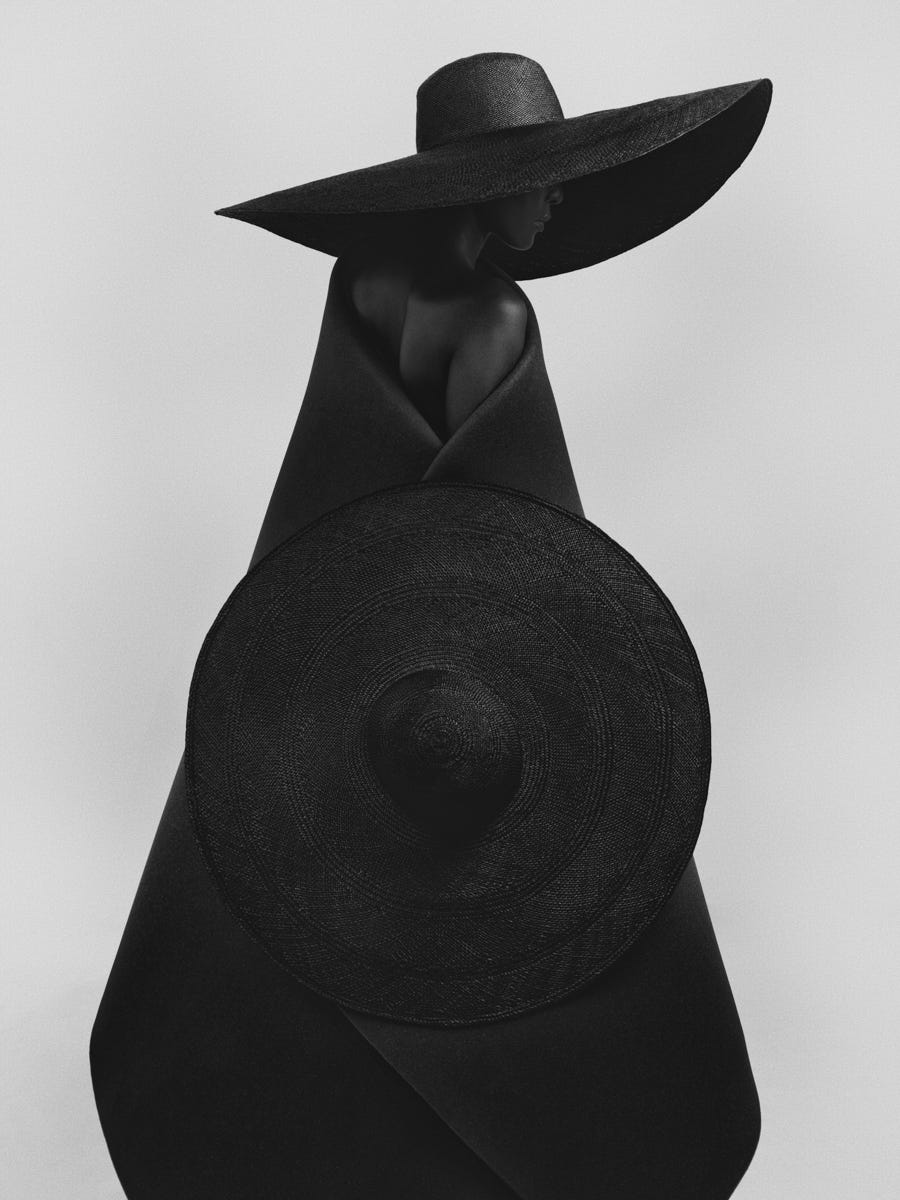
The most recent picture was taken in March this year when Tino and I were working together on a shoot for Maison Michel, the Parisian hat maker that has been part of the Chanel group since 1997. That day resulted in Modiste: a wide black straw hat, her profile beneath it and the body wrapped in a dark cone. The title is the French word for a woman who makes hats.
The idea of headwear as sculpture has been present in our work since the creation of the first crown in 2016, so visiting the workshop of a company that has been producing these items since 1936 felt like arriving somewhere.
The exhibition will comprise fifteen works from 2016 to 2026, in three sizes. Fourteen of the works will be displayed on the walls, while Tino Crown will be displayed on a stand. This felt like the right way to present the picture that started it all. You will walk in and have ten years within arm’s reach, which is exactly what I wanted for this show. One more line from that same message: ‘It’s been an absolute honour to have you capture me these past 10 years, and I cannot wait to see what the next 10 years will bring.’ Tino will be there on the thirtieth, and after all this time, it seems only fair that we should stand in that room together, surrounded by all the works.
Opening: Friday 30 October 2026, 16:00–19:00
Studio Woudt, Hazenkoog 9, Alkmaar
Registration required: studiowoudt.com/events/opening-tino-10-year-show
The exhibition runs until 31 March 2027 and can also be visited by appointment.
More information to follow.
— Bastiaan