


A fashion designer builds furniture that looks like it was excavated from the earth. In a Japanese garden, someone has been cutting the same tree for forty years. A sculptor once patted a block of rusted steel and called it slow space. And somewhere in the Italian Alps, a million photographs sit in wooden drawers, waiting for someone to look at them again.
Four things that stayed with me this month. None of them are connected. Except they are.
Rick Owens Furniture
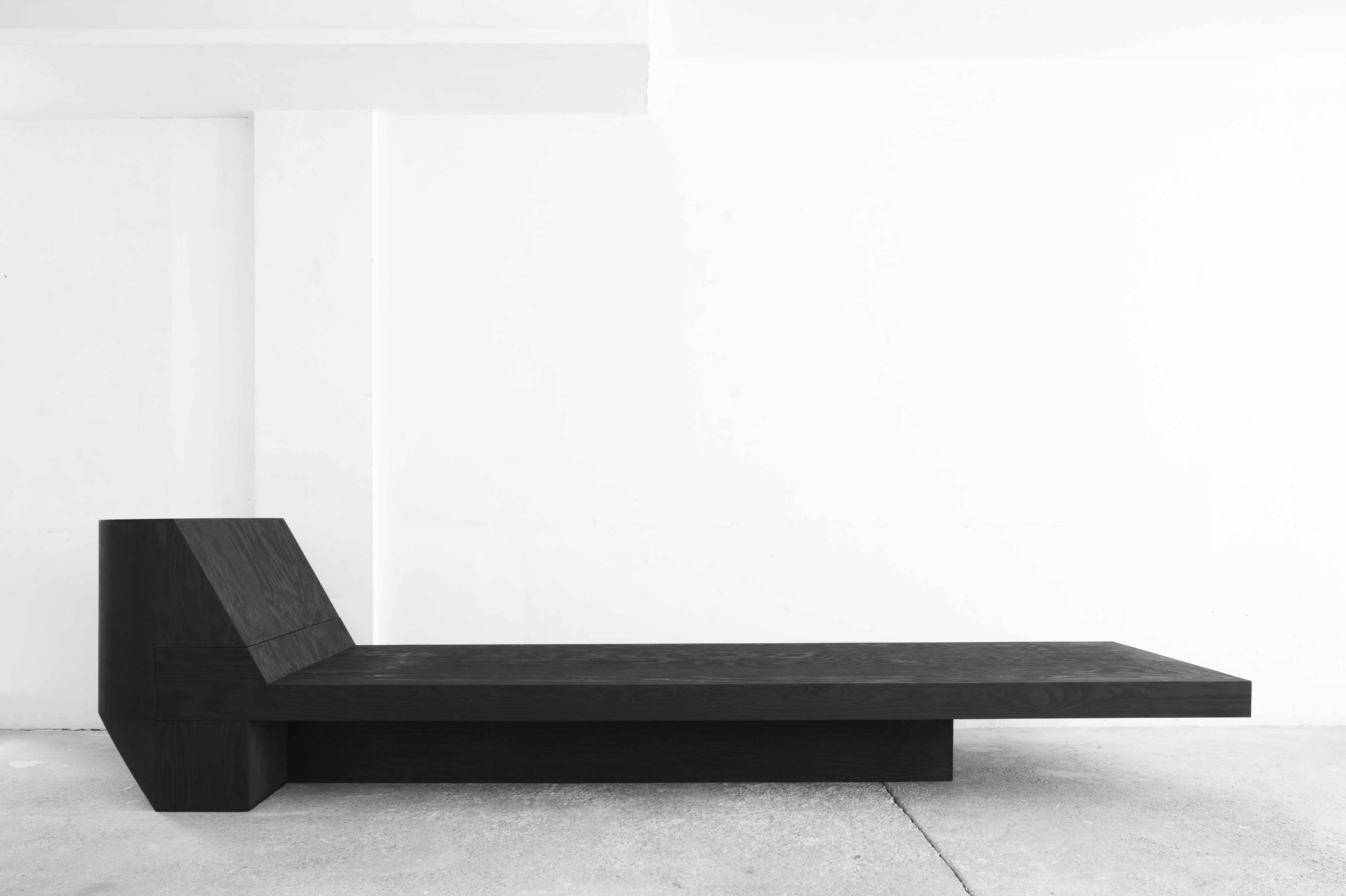
Rick Owens started in fashion. Draped fabrics, elongated silhouettes, a world built on the body. But at some point he moved to stone. Alabaster. Plywood. Black marble. And the objects he makes now look nothing like furniture.
A bench that could be a sarcophagus. A table that could be an altar. There is no gesture toward comfort. No cushion, no curve to welcome you. These are objects that refuse to explain themselves. And that refusal is what makes them impossible to ignore.
What Owens does is strip a form down until only its weight remains. No decoration. No reference to domesticity. Just mass, material, and silence. His furniture page reads like a gallery of monoliths — pieces that exist somewhere between sculpture and architecture, between function and confrontation.
There is a word for this approach: honesty. The material is what it is. The form is what it is. Nothing hides behind a finish or a clever detail. I wrote about Studio STRAF in December — a studio in Antwerp built on the same principle. And Glenn Sestig, whose work I mentioned last month, operates in the same register. These are people who trust their material enough to leave it alone.
Owens once said he wants his objects to look like they already existed and he just found them. That might be the most precise description of creative restraint I have heard.
Cloud Pruning
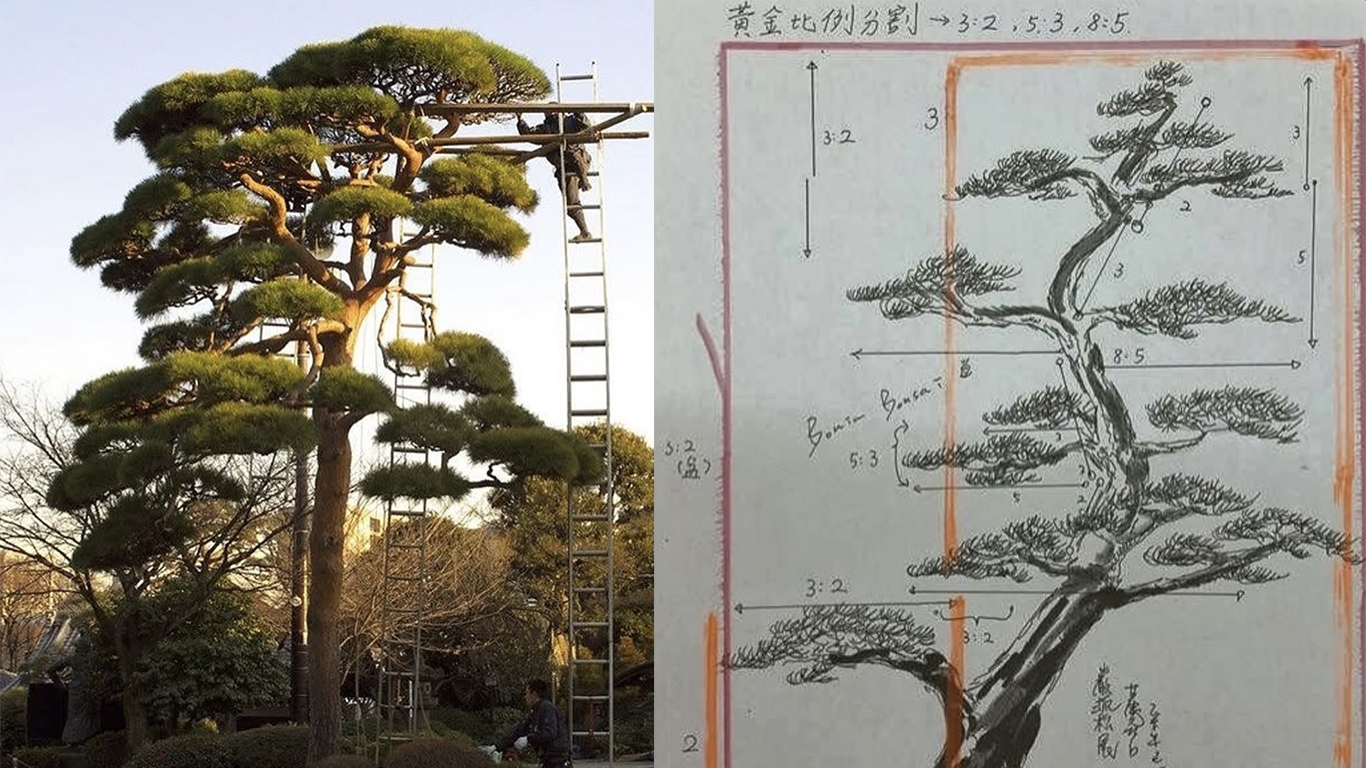
Niwaki is the Japanese art of training trees. Not into topiary shapes. Not hedges trimmed to look like animals or geometric forms. Niwaki is about revealing a tree’s essential structure by removing everything that obscures it.
The pruner works over years. Sometimes decades. Each season, a few branches are removed. Not the dead ones. The living ones that pull attention away from the core form. The goal is not to impose a shape. The shape is already in the tree. The work is in uncovering it.
What makes this fascinating is the patience. A niwaki master does not finish a tree. The tree is never finished. It is an ongoing negotiation between growth and restraint, between what the tree wants to become and what the pruner sees it could be.
Rick Rubin talks about something similar when he describes the creative process as receiving rather than manufacturing. The idea that the work already exists somewhere and your job is to clear the path toward it. Cloud pruning makes that idea physical. You can stand in front of it and see what decades of careful removal look like.
There is a lesson in that for anyone who edits. Photographs, text, music, film. The best edit is not the cleverest cut. It is the one that reveals what was already true.
Eduardo Chillida — Médecins du Monde
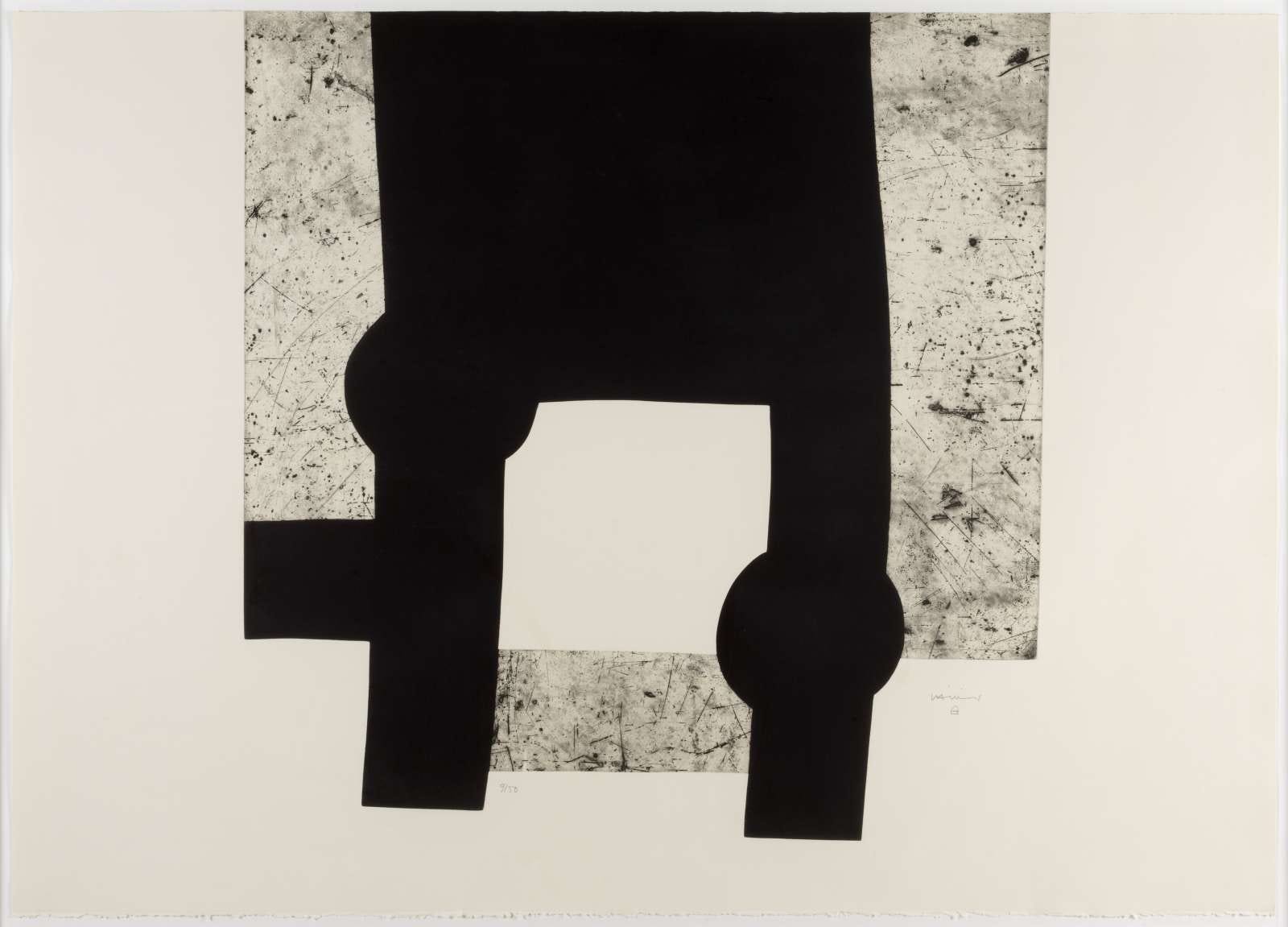
In 1992, Eduardo Chillida made a print for Médecins du Monde. Doctors of the World. The French humanitarian medical network founded in 1980 that now operates in over 70 countries, providing care in conflict zones, refugee camps, and communities where health systems have collapsed. For their cause, Chillida made an etching with embossing. Black ink on white paper. A form that seems to both hold and release space at the same time.
It is a large work. 120 by 160 centimeters. And it stopped me completely.
Chillida was Basque. He studied architecture in Madrid, then briefly played goalkeeper for Real Sociedad before turning to art full-time. That combination of architecture, physicality, and the instinct to defend a space runs through everything he ever made.
He spent his life exploring one question: what is the relationship between mass and void? Not as opposites, but as two states of the same thing. In a 1986 interview with the LA Times, he gestured through the air and said: “This is a quick space.” Then he patted a rusted steel sculpture: “And this is a slower space.” In their teachers’ notes on Chillida, Hauser & Wirth summarize his philosophy: “Matter is slow, heavy space, and space is fast, light matter.”
That reframes everything. The black forms in the Médecins du Monde print are not sitting on white paper. They are creating the white space around them. The void is not absence. It is the other half of the form.
For anyone who works in black and white, in any medium. This hits close. What you leave out is not empty. It is active. It is doing as much work as the darkest mark on the page. Olafur Eliasson reduces experiences to their essential elements. Chillida does something similar, but with more gravity. Literally. His sculptures weigh tons. And yet they feel like they are about air.
Vittorio Sella — The Shot of Time
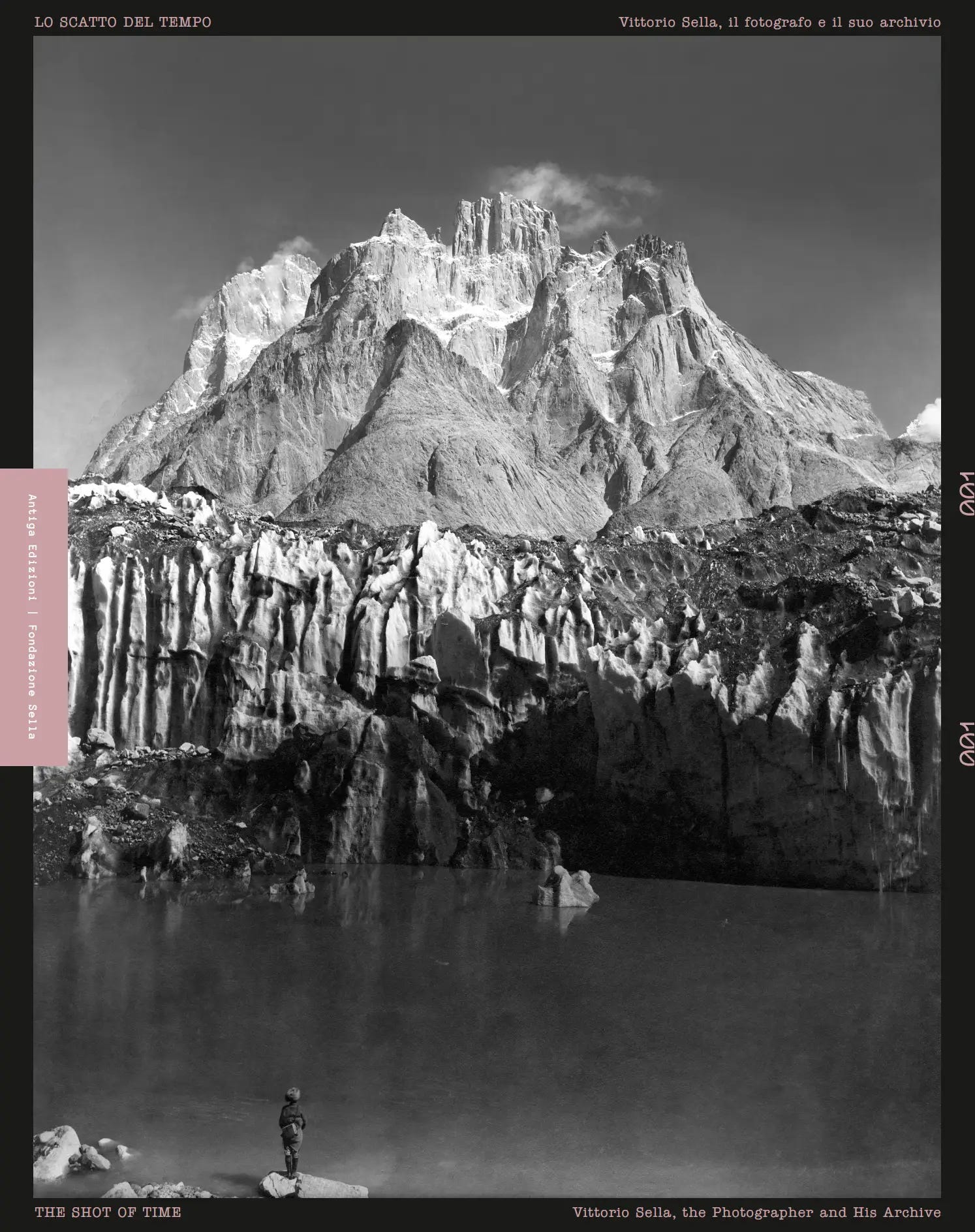
In 1882, a 23-year-old Italian made the first winter ascent of the Matterhorn. He carried a large-format camera with him. The plates were up to 30×40 centimeters. The conditions were brutal. The photographs were extraordinary.
His name was Vittorio Sella. Over the next four decades, he would photograph mountains on five continents: the Caucasus, Alaska, the Himalayas, the Karakoram, the Ruwenzori in East Africa. Always with the same commitment to large-format precision under impossible circumstances.
Ansel Adams, no stranger to mountains himself, wrote about Sella in 1946: “A reverent and intelligent artist.” He described being “amazed by the mood of calmness and perfection pervading all of Sella’s photographs.” Calmness. Made at altitude. In freezing temperatures. With glass plates.
But the real story is what happened after. The Fondazione Sella in Biella, Italy, now holds approximately one million photographs. Glass plates, prints, negatives. An entire lifetime of looking, preserved in wooden drawers and climate-controlled rooms. Photographer Giulio Favotto was invited to photograph the archive itself for a new book: The Shot of Time: Vittorio Sella, the Photographer and His Archive. I came across it at the MIA Photo Fair in Milan this March and spent a while talking with Favotto about the project. That conversation stayed with me longer than most things at the fair.
What he captured is not the spectacular mountain images. It is the infrastructure. The shelves, the containers, the physical weight of a practice sustained over an entire life. And that might be more powerful than any single summit photograph. Because it shows what commitment actually looks like when the cameras are off and the expeditions are over.
There is something Frederick Buyckx understood too, with Horse Head. The idea that a body of work only becomes what it is through years of returning. Sella returned to the mountains for forty years. The archive is proof.
A furniture maker who strips every unnecessary line. A gardener who reveals a tree by taking branches away. A sculptor who treated void as material. A photographer whose archive outlived him by a century.
Four different disciplines. One shared instinct: the power is not in what you add. It is in what you sustain, refine, and, in the right places, remove.
— Bastiaan
Martin Buber: “Through the Thou a person becomes I. Becoming I, I say Thou.” Two inseparable entities of the I and you. About identity!
beautiful inspiration and as a fan of Rick Owens’ works, happy you included him 🖤