


I’ve been reading a lot lately.
This month alone, I finished six books. They covered different subjects, featured different voices, and took me to different worlds. But only a few have really stayed with me.
The two books below made the deepest impression. In very different ways, they both deal with perception, awareness, and how we relate to the world around us. One deals with the fear of losing sight, and the other deals with the practice of going inward to see more clearly.
This month’s other inspirations seem to naturally orbit around that same theme. How we look. How we observe. How we create meaning through form, rhythm, space, sound, and image.
Book: De blinde fotograaf by Hannes Wallrafen
De Blinde Fotograaf tells the story of a photographer who gradually loses his sight and must relearn how to live, move, and relate to the world without vision. The book is both a personal account and a practical reflection on what it truly means to be blind in a society built around sight.
I was drawn to this book for a very simple reason. Losing my sight is my greatest fear. Photography is how I navigate the world.
It’s how I see, think, and understand. The idea of losing that ability is terrifying. Perhaps that fear is exactly why I felt compelled to read this book.
De Blinde Fotograaf is a Dutch book, and unfortunately, there is no English translation available. It’s a shame because the insights it offers feel universal.
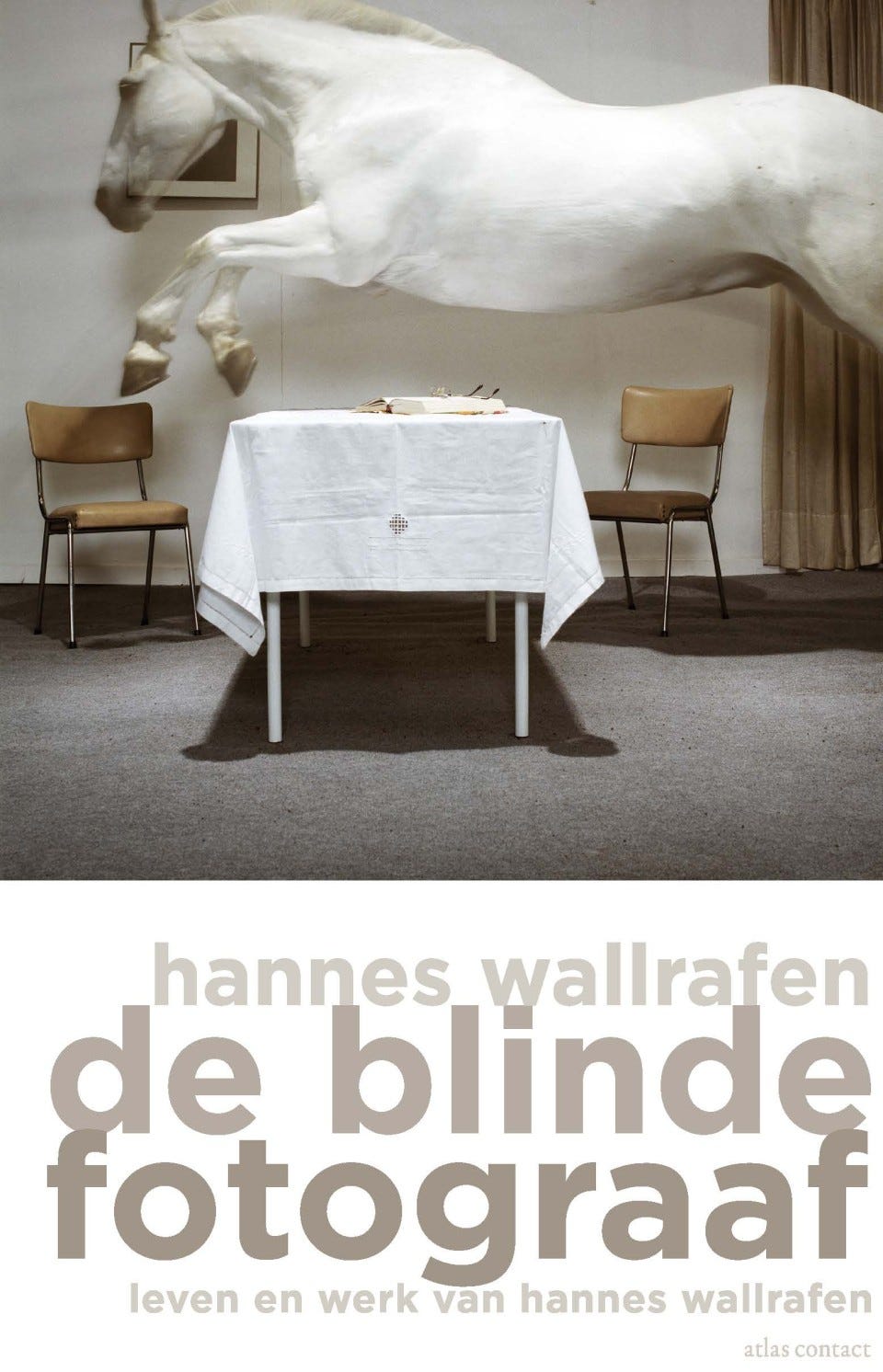
The book is not just about losing your sight. It is about what comes after. About learning how to move through a world that is no longer built for the way you perceive it. Wallrafen writes with clarity, humor, and an honesty that never turns dramatic.
It offers real insight into what blindness means. The logistics. The constant adjustments. The mental discipline it requires. It is confronting, yes, but also grounding. Reading it made me more aware of how blind people move through daily life, and how much we take visual autonomy for granted.
This quote stayed with me:
“I even burst out laughing once when I had crossed a street under construction and accidentally ended up in a pit as deep as a man is tall. Anyone who, as a blind person, constantly worries about all the terrible things that might happen, would be better off staying behind the geraniums.”
Fear is present, but so is resilience.
Book: Catching the Big Fish by David Lynch
It’s one of those books I return to again and again. Not because it provides answers, but because it prompts thought-provoking questions. It’s about creativity. About ideas. About consciousness. It emphasizes the importance of protecting the space where ideas can surface.
Lynch discusses meditation not as a lifestyle accessory but as a practical tool. It’s a way to access deeper layers of thought. It’s a way to generate better ideas.
Some lines continue to resonate:
“Stay true to yourself. Let your voice ring out, and don’t let anybody fiddle with it. Never turn down a good idea, but never take a bad idea. And meditate.”
“The more the artist is suffering, the less creative he is going to be.”
“Ideas are like fish. If you want to catch little fish, you can stay in the shallow water. But if you want to catch the big fish, you’ve got to go deeper.”
And the one that stays closest to how I think about making work:
“A film should stand on its own. It’s absurd if a filmmaker needs to say what a film means in words. The world in the film is a created one, and people sometimes love going into that world. For them that world is real. And if people find out certain things about how something was done, or how this means this or that means that, the next time they see the film, these things enter into the experience. And then the film becomes different. I think it’s so precious and important to maintain that world and not say certain things that could break the experience. You don’t need anything outside of the work.”
Architecture: Zicatela House by Ludwig Godefroy and Emmanuel Picault
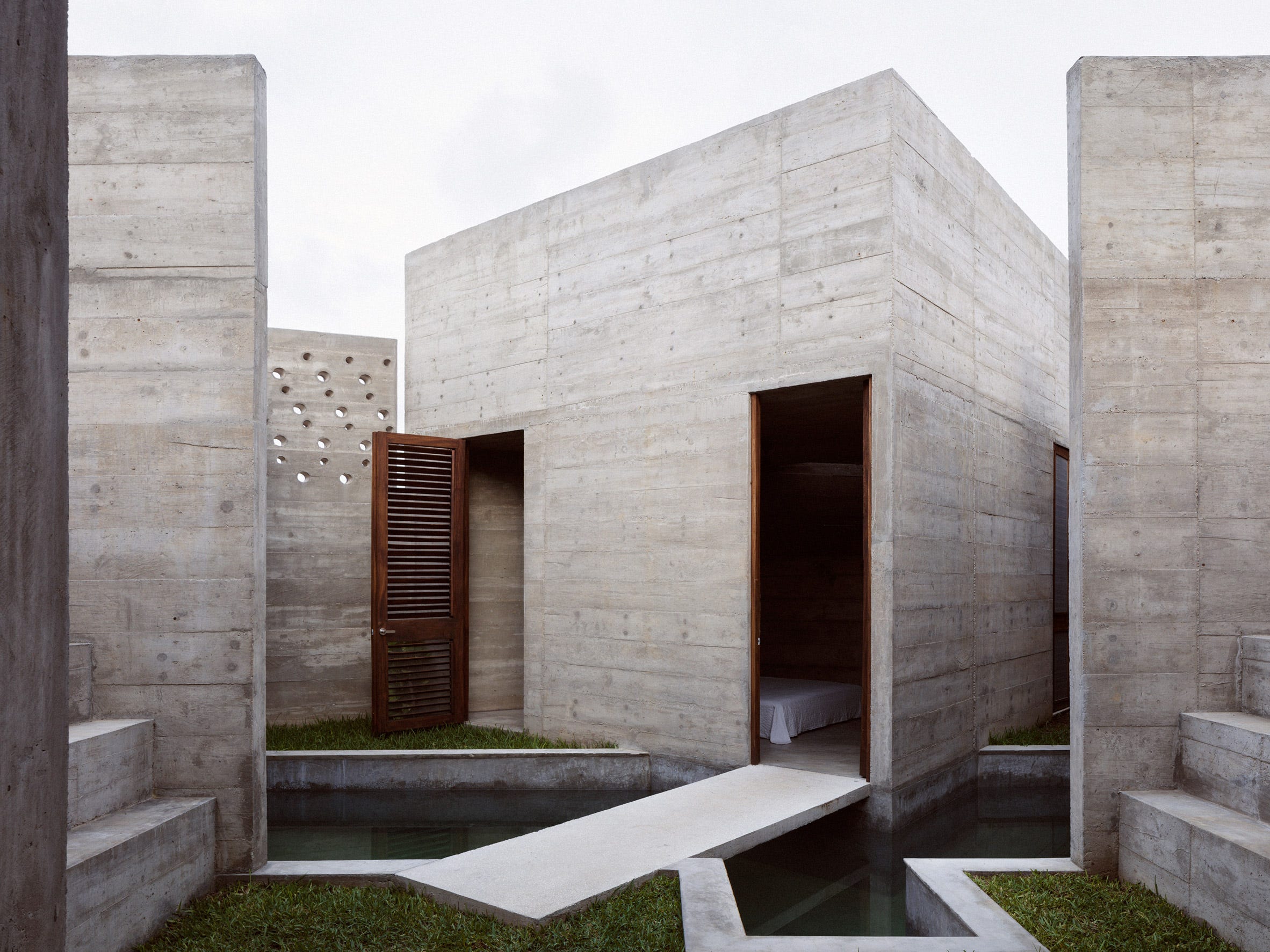
Lately, I’ve become increasingly drawn to Mexican architecture. Zicatela House feels both ancient and contemporary. Its design is inspired by Aztec temples and expressed through monolithic concrete forms. The forms are heavy and grounded. Steps, pools, and bridges. It’s architecture that feels carved rather than constructed. What makes it work for me is the balance. The brutality of concrete is softened by dark wood. The warmth introduced through interior design choices. It never becomes cold.
It’s brutalism with soul.
Art : Antonio González
(Valencia, Spain, 1974) is an abstract painter and a colleague at the Alzueta Gallery.
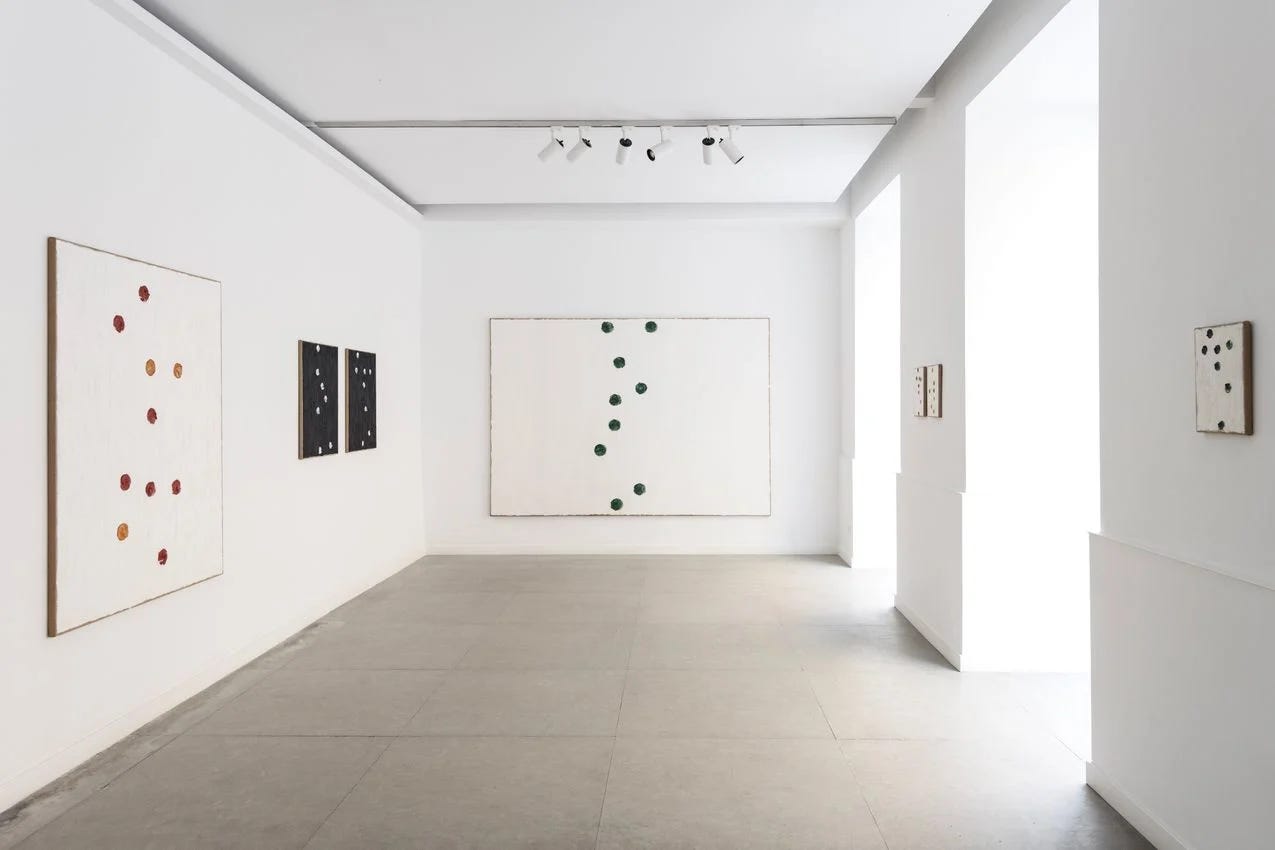
I love his work for its restraint. His pieces consist of dots, repetition, and minimal gestures that somehow carry weight. His work is quiet, yet never empty. There is confidence in knowing when to stop. That discipline shows.
Music: St. Germain — “Rose Rouge”
This track was on repeat while I walked through Barcelona at the end of January. The sun was on my face, and I had no rush. I was just moving.
An old one. But it’s still incredibly strong. It carries a mood that doesn’t age.
Photography: Dovima with Elephants by Richard Avedon
Some images stay with you forever. This is one of them.
Taken in 1955 at the Cirque d’Hiver in Paris, “Dovima with Elephants” was originally published in a Paris fashion story for Harper’s Bazaar. Avedon once described fashion photography as “a vacation from life,” and this image embodies that sentiment.
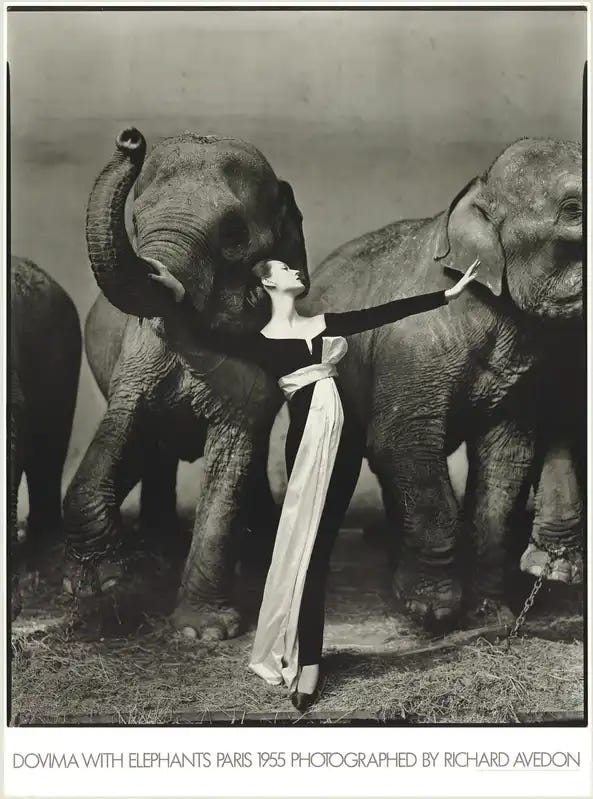
He first saw the elephants standing beneath a vast skylight. Then came the dress: It was the first design for Dior by nineteen-year-old Yves Saint Laurent. Everything aligned to create something surreal.
Dovima stands poised and fearless. Her elegant form mirrored the elephants’ curves. There is tension, grace, and control. It’s a carefully improvised dream image.
See you next month for more inspiration
— Bastiaan